
Financial System Report (October 2026)
October 23, 2026
Bank of Japan
Motivations behind the October 2026 issue
In global and domestic financial markets, the expansion in global AI-related demand had the effect of improving market sentiment, although uncertainties remained high over the situation in the Middle East. Against this background, stock prices increased, and credit spreads on corporate bonds remained at low levels. However, uncertainties remain high over factors such as the future situation in the Middle East, the profitability and financing of AI-related investment, and developments in the foreign non-bank financial intermediary (NBFI) sector. This Report assesses the stability of the financial system under such an external environment.
With regard to the foreign NBFI sector, private funds and other entities have been playing an increasingly prominent role as providers of financing amid the substantial increase in global AI-related investment. This Report examines these recent developments and, in its macro stress testing, refines the specification of the impact of a decline in expectations regarding the profitability of AI-related investment and assumes the situation where shocks are amplified mainly by portfolio adjustments in the foreign NBFI sector, thereby assessing the adequacy of banks' capital.
While no major financial imbalances have been seen in the domestic financial cycle, developments in asset prices, such as real estate prices and stock prices, continue to warrant careful attention and close monitoring. Furthermore, the Report examines the effects of the rise in raw material and energy prices reflecting the situation in the Middle East on small and medium-sized enterprises (SMEs), as well as the effects of interest rate increases on the corporate and household sectors. In addition, it assesses banks' profits and loss-absorbing capacity during the phase of policy rate hikes and examines issues surrounding loan and deposit management.
Moreover, given that advances in so-called "frontier AI" have further heightened cybersecurity threats, this Report reviews the efforts undertaken by financial institutions, financial authorities, and other relevant entities.
Executive summary: Stability assessment of Japan's financial system*
Japan's financial system has been maintaining stability on the whole.
In the loan market, financial intermediation has continued to function smoothly as firms' demand for loans has continued to rise and banks' lending stance has remained active. Under these circumstances, no major financial imbalances have been seen in current financial activities.
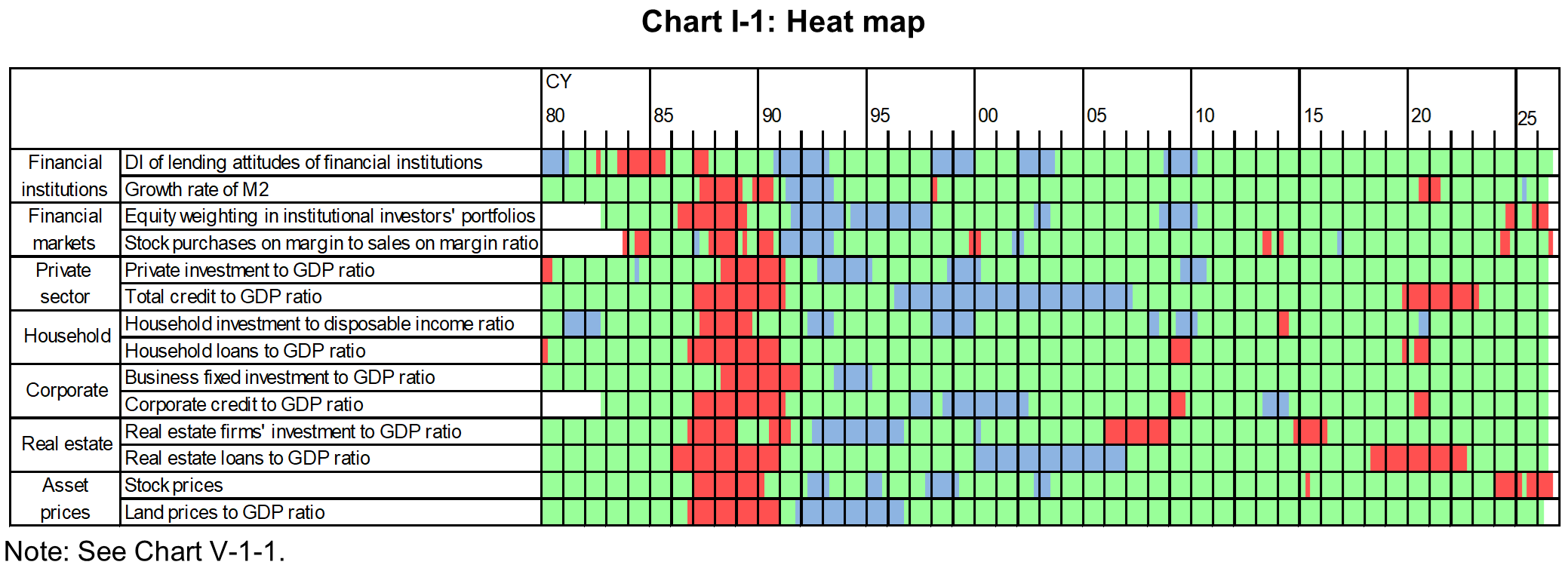
Japanese banks have sufficient capital bases and stable funding bases to withstand various stress situations, specifically including (1) stress equivalent to the global financial crisis that would cause major corrections in financial markets and the real economy at home and abroad; and (2) a compound stress of the materialization of geopolitical risks such as a rise in crude oil prices, together with a decline in expectations regarding AI, and a substantial rise in interest rates, all happening simultaneously. However, it is necessary to continue to carefully monitor the impact that factors such as the future situation in the Middle East, the profitability and financing of AI-related investment, and developments in the foreign non-bank financial intermediary (NBFI) sector have on the financial system through various channels. From a long-term perspective, if a structural decline in firms' loan demand, mainly reflecting the population decline, persists, banks' profitability and loss-absorbing capacity could decline, depending on the supply and demand balance in the loan market. This could lead to a contraction of financial intermediation activities or an overheating, such as an excessive search for yield. From the perspective of maintaining stability in Japan's financial system, close attention is warranted on future developments in the system, while examining both overheating and contraction risks (Chart I-1).
Developments in asset prices
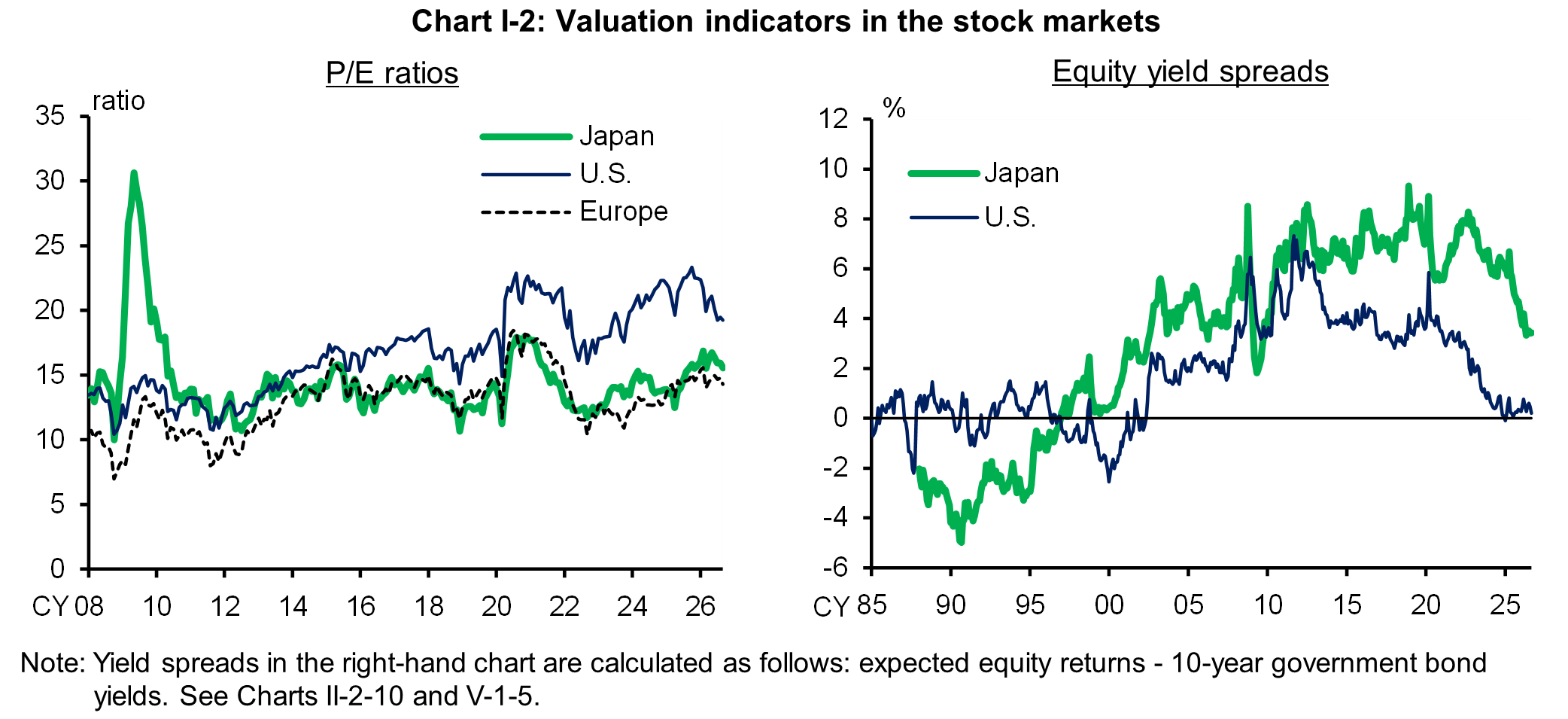
The stock prices indicator has continued to deviate upward from its trend, as indicated by "red" in the heat map (Chart I-1). Nevertheless, in terms of stock valuations as of the end of September, price-earnings (P/E) ratios have remained broadly around their average levels since 2008, reflecting an increase in expected earnings per share (EPS), which is the denominator (left panel of Chart I-2). Risk premiums indicated by the equity yield spreads, i.e., the difference between expected equity yields and 10-year Japanese government bond (JGB) yields, have declined somewhat amid rising interest rates, but have remained at relatively high levels from a somewhat longer-term perspective (right panel of Chart I-2). Japanese stock prices have been rising, supported by expectations of profit improvements in sectors such as electric appliances, precision instruments, nonferrous metals, and machinery, which stand to benefit relatively more from the ongoing global expansion in AI-related demand. Thus, Japanese stocks could face adjustment pressure if profits do not expand in line with large-scale AI-related investments by hyperscalers and other firms across related industries. Given that Japanese banks have a certain amount of market risk associated with their stockholdings, close attention should continue to be paid to developments in risky asset prices, including stock prices.
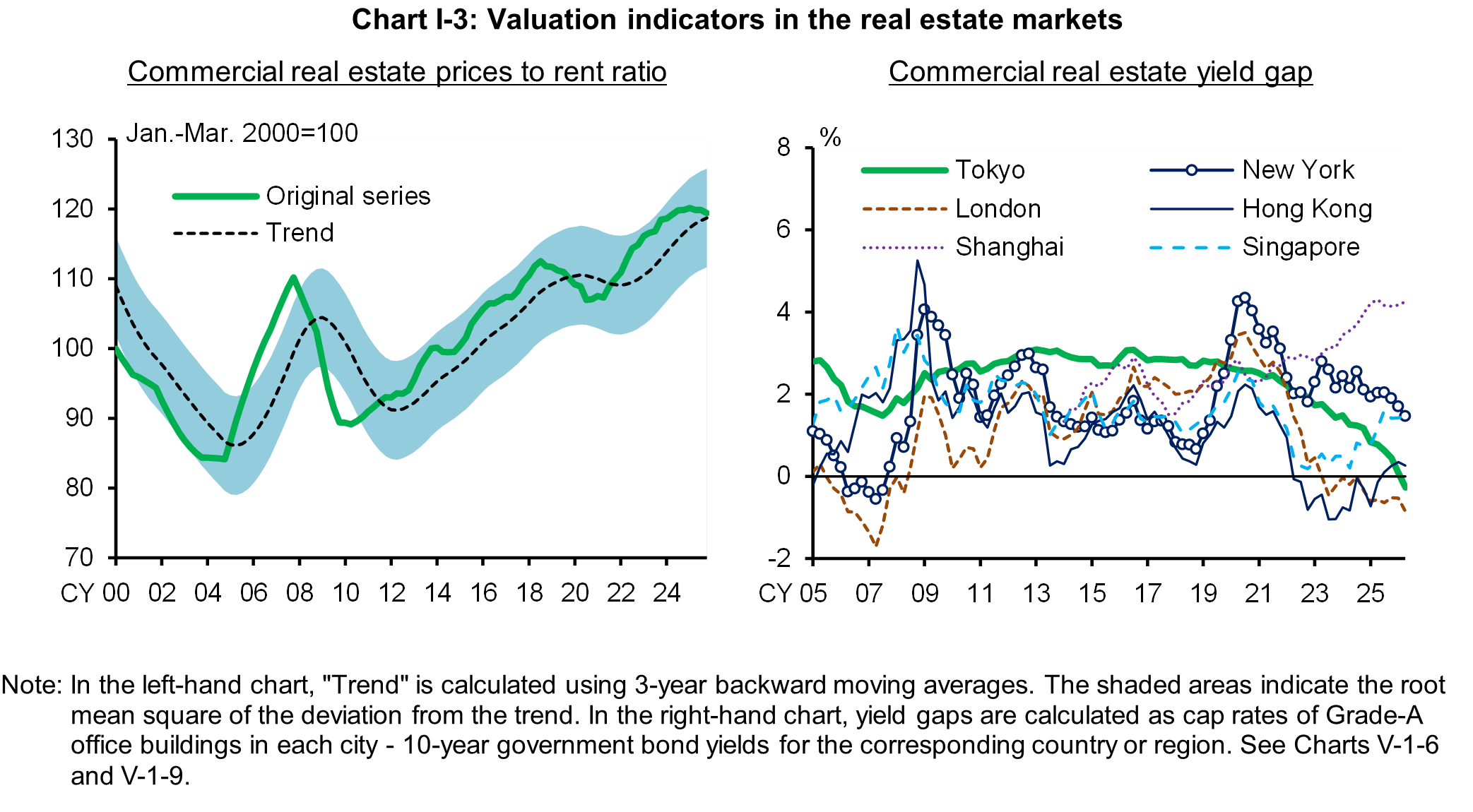
Overall, real estate prices have been rising, reflecting the economic recovery and price rises. Real estate prices to rents have largely remained in line with the trend (left panel of Chart I-3). That said, in the three major metropolitan areas, particularly in the Tokyo metropolitan area, the pace of price increase has been accelerating. A surge in construction costs and supply constraints due to labor shortages have likely contributed to the rise in real estate prices. In addition, robust property demand supported by a moderately recovering economy, coupled with demand for investments, including condominium transactions and commercial real estate purchases by foreign investors, has also likely contributed to this trend. The yield gap, which indicates real estate risk premiums, for commercial real estate in Tokyo has been declining due to the increases in property prices and interest rates. It remains necessary to closely monitor developments in the real estate market (right panel of Chart I-3).
Foreign NBFI sector and AI-related investment
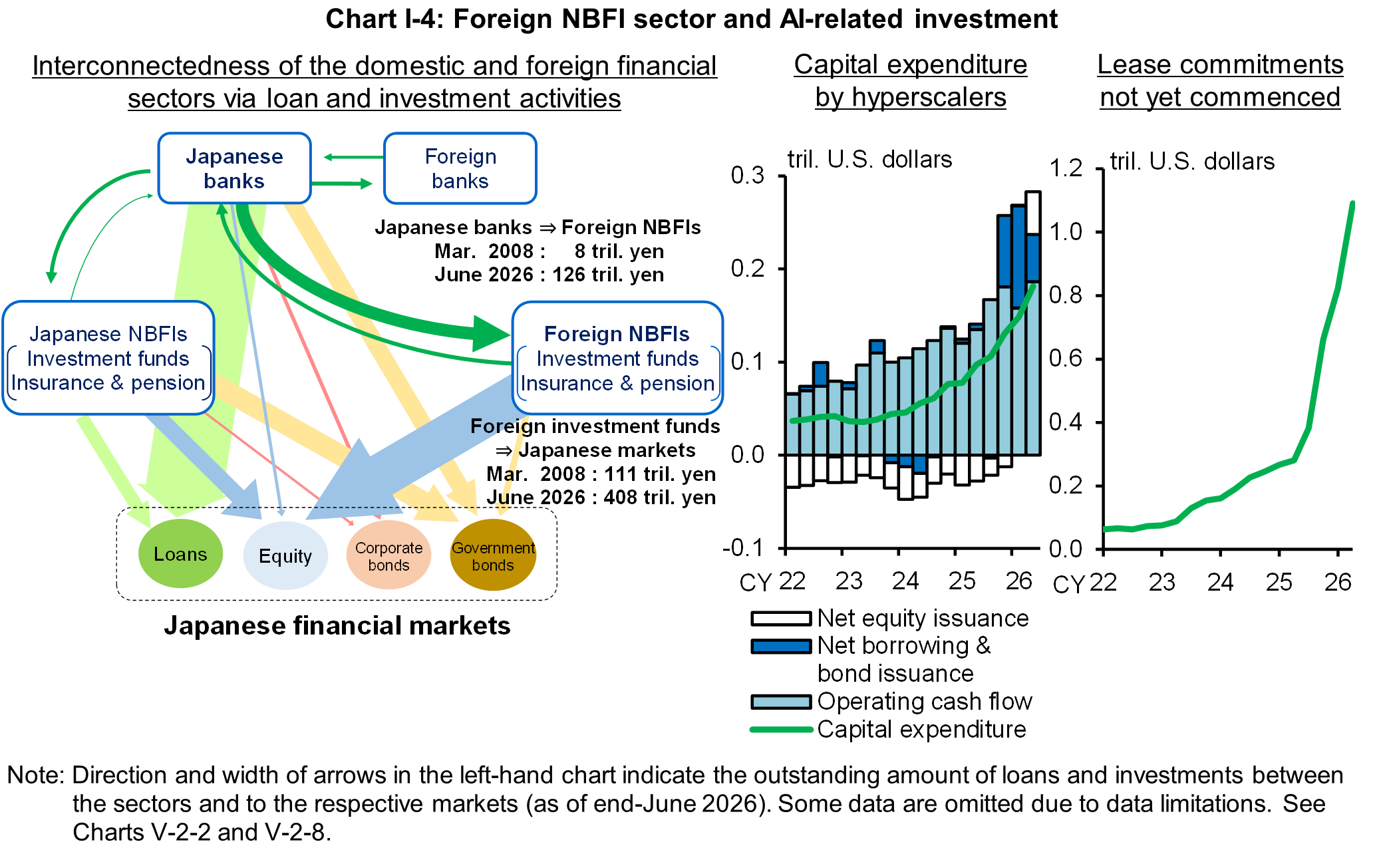
The presence of the foreign NBFI sector has expanded globally, raising concerns about risks such as the amplification of shocks in the event of stress. Although the share of financial assets held by the domestic NBFI sector in Japan is relatively low compared with other countries, there has been a steady increase in lending to and investment in the foreign NBFI sector by domestic banks, as well as in investments in Japanese stocks and bonds by the foreign NBFI sector, particularly those related to foreign funds (left panel of Chart I-4). Against this background, Japan's financial system may have become more susceptible to fluctuations in global financial markets and developments in foreign investment funds.
Driven by strong expectations for growth in AI-related markets, hyperscalers, particularly in the United States, have significantly increased their business fixed investment recently. While hyperscalers have traditionally financed data center investment with their internal funds, they have recently increased external financing mainly through corporate bond issuance and have increasingly sought to secure rights to use third-party data centers via long-term lease commitments (middle and right panels of Chart I-4). Against this background, foreign NBFIs, including private funds, have been playing an increasingly prominent role as providers of financing for the part of such investment that hyperscalers cannot cover with their internal funds. In addition, the share of AI-related stocks in the portfolio of hedge funds conducting global equity investment has been increasing. If expectations regarding the profitability of AI-related investment were to decline, shocks could be amplified, mainly through portfolio adjustments in the foreign NBFI sector, and the effects could spill over to Japan. With regard to major banks' overseas lending, although lending to foreign funds and data centers accounts for a limited share of total overseas lending, these areas have become focus segments for major banks, reflecting factors such as high interest rate spreads. Banks engaged in such lending need to carefully manage the quality of their portfolios.
The macro stress testing in this Report refines the specification of the impact of a decline in expectations regarding the profitability of AI-related investment and assumes the situation where shocks are amplified mainly by portfolio adjustments in the NBFI sector. Based on the results, it can be judged that the stability of Japan's financial system is maintained. However, it is necessary to carefully monitor the sustainability of global AI-related demand, including future developments and their effects.
Firms' and households' credit costs
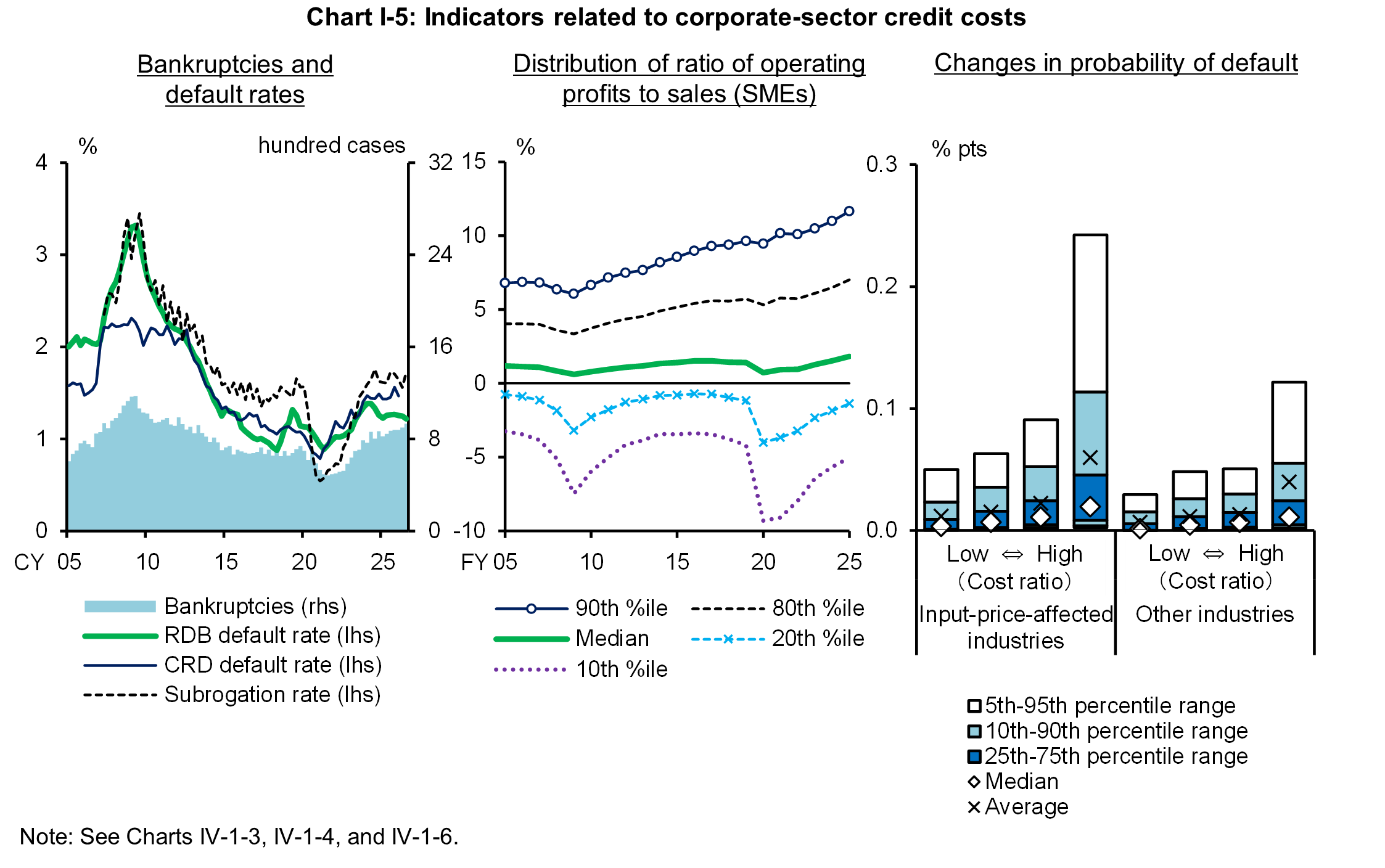
Although above pre-pandemic levels, corporate bankruptcies and default rates have been more or less unchanged (left panel of Chart I-5). Examining the distribution of the ratio of operating profits to sales for small and medium-sized enterprises (SMEs), there are substantial disparities across firms. The ratio of operating profits to sales has improved steadily among SMEs in the upper range of the distribution, while the ratio for those in the lower range has remained broadly unchanged in negative territory (middle panel of Chart I-5). Large-scale disruptions in supply chains have been avoided in the wake of the situation in the Middle East, partly due to progress in securing alternative sources of supply. Nevertheless, developments such as the rise in raw material and energy prices appear to be exerting downward pressure on profits, particularly at SMEs. An examination of the effects of a hypothetical 100 percent rise in crude oil prices on the probabilities of default of SMEs shows that the share of SMEs experiencing an increase in their probabilities of default is overall limited. However, it should be noted that, among SMEs with cost structures that tend to be susceptible to the effects of the rise in crude oil prices, some exhibit relatively large increases in their probabilities of default (right panel of Chart I-5).
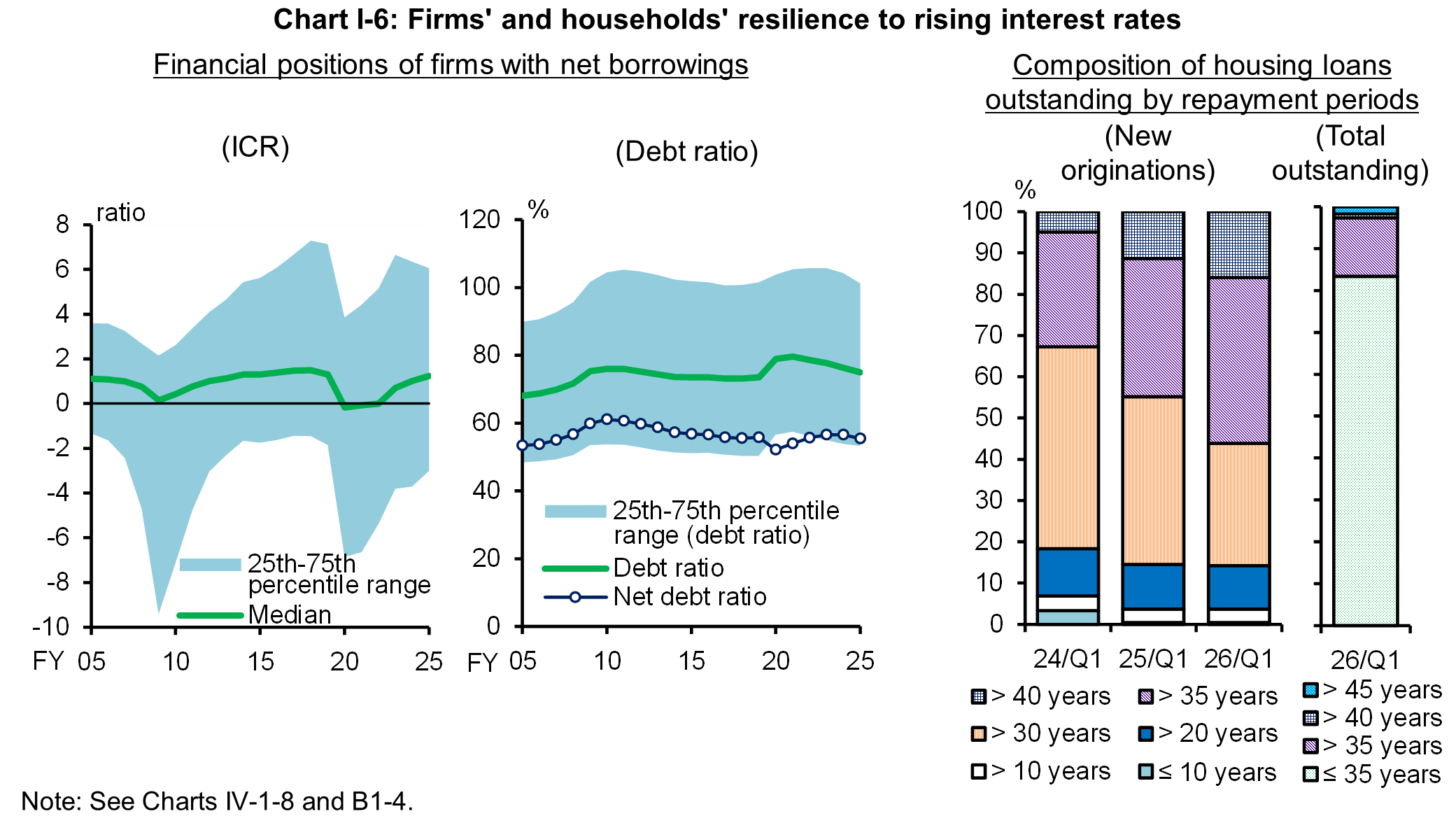
Next, with regard to the impact of rising interest rates on the corporate and household sectors, in the corporate sector, the share of de facto debt-free firms is on an increasing trend, and even among firms whose borrowings exceed their cash and deposit holdings, interest coverage ratios (ICRs) and debt ratios have been on a moderate improving trend. This indicates that, overall, firms' resilience to interest rate rises has improved (left panel of Chart I-6). However, it should be noted that there is substantial dispersion in the financial indicators of firms whose borrowings exceed their cash and deposit holdings. In addition, the impact of rising interest rates may vary by borrower firm, depending on factors such as the type of lending rate.
In the household sector, although the applied interest rates on floating-rate housing loans, which account for the majority of housing loans, have been rising, improvements in the employment and income situation, such as recent wage growth, are likely to mitigate the repayment burden. However, while housing loans have tended to be larger in size, mainly reflecting the rise in property prices, the increase in the use of super-long-term housing loans with maturities of more than 35 years to keep monthly repayments within a certain range warrants attention (right panel of Chart I-6). Banks are expected to provide sufficient explanations to borrowers and carefully manage risks, particularly for super-long-term housing loans, taking into account that borrowers' debt servicing capacity may deteriorate over the long loan term.
Banks' profits and loss-absorbing capacity amid rising interest rates
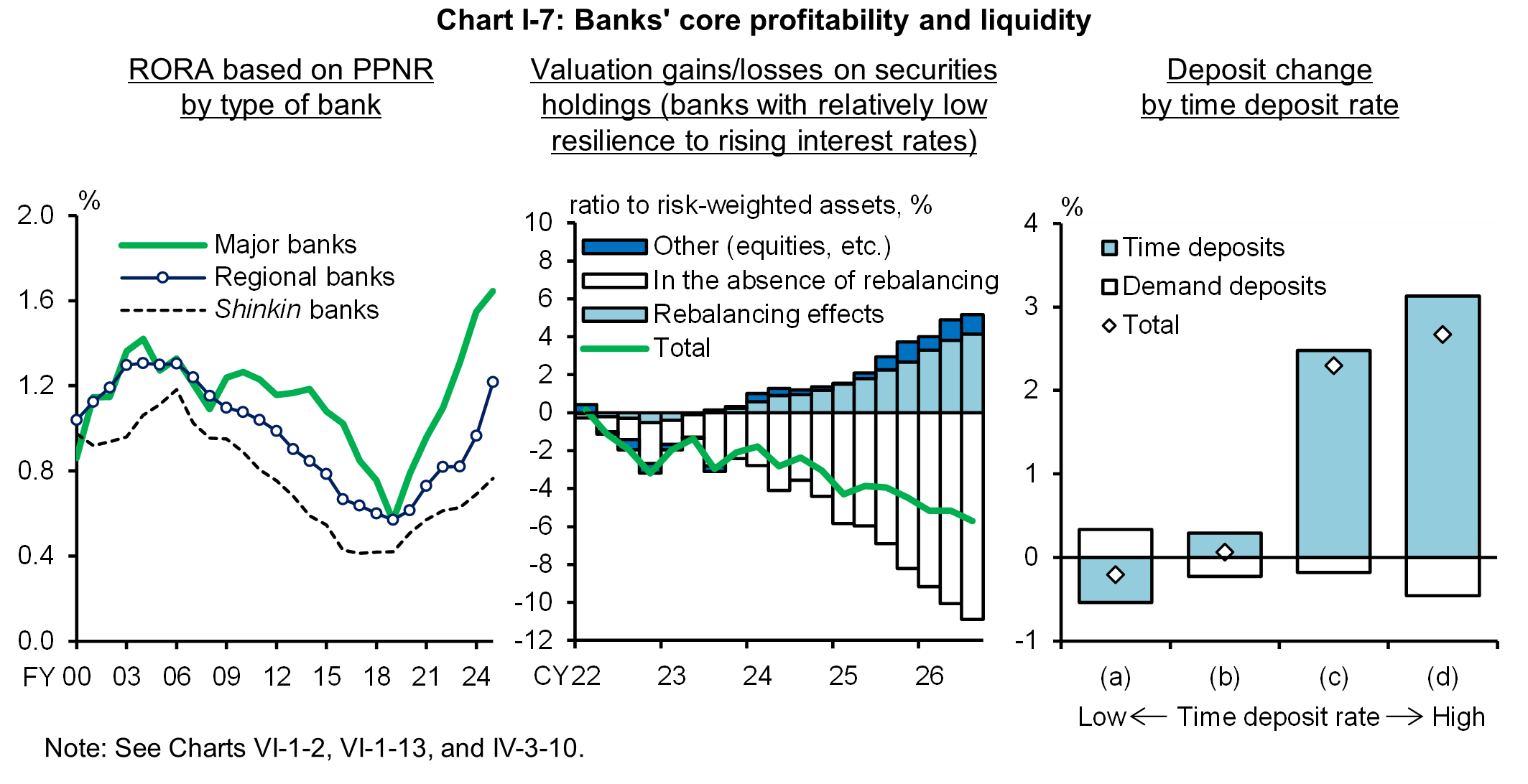
Banks' pre-provision net revenue (PPNR), which shows banks' core profitability, has continued to improve, as losses, including credit costs, have been limited amid the ongoing moderate recovery of the Japanese economy and rising interest rates (left panel of Chart I-7). On the other hand, as interest rates have risen, valuation losses on yen-denominated bonds have been increasing, particularly among regional banks and shinkin banks with a large share of yen-denominated bondholdings. Nevertheless, even among banks with relatively low resilience to interest rate increases, many have made further progress in reducing interest rate risk by cutting their yen-denominated bondholdings and shortening the duration of those holdings. Such progress has contributed to curtailing the increase in valuation losses on their bondholdings (middle panel of Chart I-7). Meanwhile, regional banks and shinkin banks with higher loan-to-deposit ratios tend to set relatively high time deposit rates, which has contributed to increases in their deposits. It should be noted, however, that deposits attracted at high interest rates may be relatively sensitive to changes in interest rate and economic conditions, and such deposits may be less sticky (right panel of Chart I-7). Banks need to continue managing their portfolios appropriately by taking into account various scenarios regarding market fluctuations and future changes in the composition of their balance sheets.
Cybersecurity measures and enhancing resilience
Advances in so-called "frontier AI" have further heightened cybersecurity threats, as they could increase the speed and scale of cyberattacks. Cyber incidents not only pose a risk to individual financial institutions and their customers but are also a material risk from a macroprudential perspective, given that their impact can potentially spread to other financial institutions. It is necessary to further enhance the resilience of individual financial institutions and the financial system as a whole.
The Bank will promote financial institutions' initiatives to address these potential vulnerabilities through on-site examinations and off-site monitoring. From a macroprudential perspective, it will continue to closely monitor the impact on the financial system of various risk-taking activities by financial institutions.
- See the Report for more details on the analyses as well as notes and sources of the charts.
Notice
This Report basically uses data available as of end-September 2026.
Please contact the Financial System and Bank Examination Department at the e-mail address below to request permission in advance when reproducing or copying the contents of this Report for commercial purposes.
Please credit the source when quoting, reproducing, or copying the contents of this Report for non-commercial purposes.
With regard to economic and financial variables of each stress scenario in the macro stress testing, please see the scenario tables [XLSX 21KB].
Inquiries
Financial System Research Division,
Financial System and Bank Examination Department
E-mail : post.bsd1@boj.or.jp